
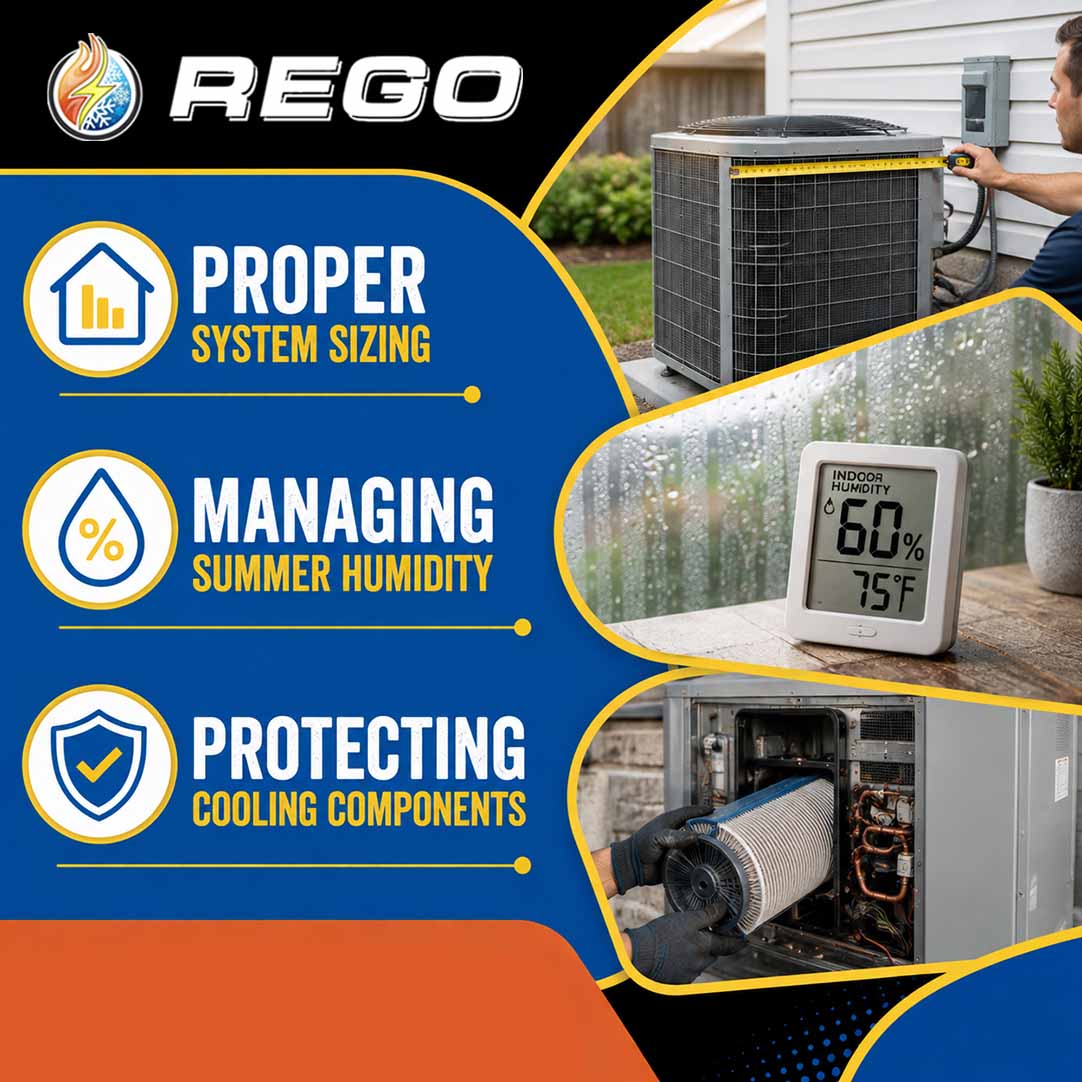
Cooling systems handle high-temperature operation best when they're sized correctly from the start and supported by consistent upkeep afterward. At Rego Services , we've found that professional AC installation and routine AC maintenance work together; one sets the system's capacity, the other protects it over time. What Determines Whether a System Can Handle Sustained Heat? A cooling system's ability to run for extended hours without strain comes down to how well it was sized and installed in the first place. Load calculations that account for square footage, insulation, window placement, and local climate determine whether a unit is matched to the home it's cooling. A system that's too small runs constantly and never quite catches up. A system that's too large cycles on and off rapidly, which wears down components faster than a system running at a steady, appropriate pace. This is why AC installation services should always start with a proper load calculation rather than a quick estimate based on square footage alone. Why Does Duty Cycle Design Matter? Every cooling system is engineered around an expected duty cycle, the ratio of time it runs versus rests during peak demand. According to ENERGY STAR , improper installation can reduce a system's efficiency by up to 30 percent, even when the equipment itself is high quality. A system operating outside its intended duty cycle works harder for longer stretches, which is exactly the condition that shows up during a prolonged summer heat spell. How Does Massachusetts Climate Affect System Design? Massachusetts summers bring a mix of high heat and heavy humidity, which puts a different kind of strain on a cooling system than dry heat does. A system designed without accounting for humidity may cool the air temperature adequately while leaving the home feeling damp and uncomfortable. Professional AC installation takes regional climate patterns into account, not just square footage, so the system manages both temperature and moisture through the hottest stretches of the season. What Wears Down a System Faster During Extended Heat? Beyond installation, certain conditions accelerate component wear specifically during long stretches of continuous operation: Extended run-time raising internal component temperatures beyond typical short-cycle conditions Electrical connections loosening gradually under prolonged vibration and heat Refrigerant pressure fluctuating more under sustained high-load conditions Outdoor unit airflow becoming restricted as debris accumulates over the season They're the slow, cumulative effects of heat exposure over weeks of continuous demand, which is why AC maintenance during summer often focuses on catching wear before it becomes a functional problem. Installation Choices vs Maintenance Habits: What Matters Most? Both installation and maintenance play a role, but they affect performance in different ways and at different points in a system's life. Factor Installation Stage Ongoing Maintenance Stage Timing One-time decision Recurring, seasonal Impact on performance Sets the ceiling for efficiency Preserves that ceiling over time Common issue if skipped Undersized or oversized system Component wear from continuous heat exposure Who typically handles it Licensed installer Homeowner plus seasonal technician visit Why Does Local Expertise Matter for Massachusetts Homes? A provider familiar with regional weather patterns, older housing stock, and typical ductwork layouts in the area brings something a generic installer can't. Air conditioning service in Dighton, MA , benefits from that local familiarity, since homes here often have specific insulation and layout characteristics that affect how a system should be sized and configured. At Rego Services, we've worked across enough homes in this region to know what typically works and what tends to cause problems later. That local experience shapes every installation and maintenance visit we do. Frequently Asked Questions How long does a typical AC installation take? Most standard installations are completed in a single day, though larger homes or more complex ductwork can extend the timeline. Does a bigger AC unit always cool a home faster? Not necessarily. An oversized unit cools quickly but shuts off before properly managing humidity, which can leave a home feeling clammy. What's the ideal time of year to schedule a new AC installation? Spring is usually ideal, since it allows time to complete the work before peak summer demand and technician schedules fill up. Ready for a System Built for Summer A cooling system that's properly sized and consistently maintained is far more likely to handle whatever the season brings. At Rego Services, we're ready to help you get there. Call (508) 837-9464 or email duane@rego-services.com to schedule your consultation today.